In today’s growing business environment, organizations are constantly looking to stay competitive and adapt to the market needs within their industry. One strategy that has gained popularity in recent years is Agile Project Management. Agile is a methodology that emphasizes collaboration, flexibility, and continuous improvement. It started in the software development industry but has since been adopted by organizations across different fields. We’d like to take this opportunity go over our simplified approach to Agile and how we leverage these methods to improve team efficiency and to provide value to our website development and application programming clients.
Embracing the Values and Principles of Agile
At Surfside Web, we prioritize communication and collaboration to ensure our team and clients are always on the same page, but customer satisfaction is our highest priority. We achieve this through the exchange of ideas and insights and continuous delivery of workable software project tasks. This enables us to get feedback and make improvements quickly.
We believe it’s important to keep our focus on essential tasks, because we understand the necessity of minimizing distractions and delivering efficient custom built software applications. In a nutshell, our Agile approach revolves around team collaboration, prioritizing customer satisfaction, embracing change, and maintaining simplicity. As a result, we are able to maintain an efficient team and provide ideal outcomes for our client.
Daily Stand-Up Meetings
Daily stand-up meetings are an important part of our Agile process that keeps our team focused and connected. The main goal of meetings is to share progress, identify obstacles, and make sure we are well aligned. In essence, these meetings enforce team collaboration, which helps us to address challenges and work together to tackle them effectively.
To ensure effective stand-ups, we keep meetings short and to the point, encourage participation from all team members, and resolve the details of roadblocks separately to avoid distractions and derailment. By following these guidelines, our daily stand-up meetings contribute to an efficient and collaborative work environment.
Kanban
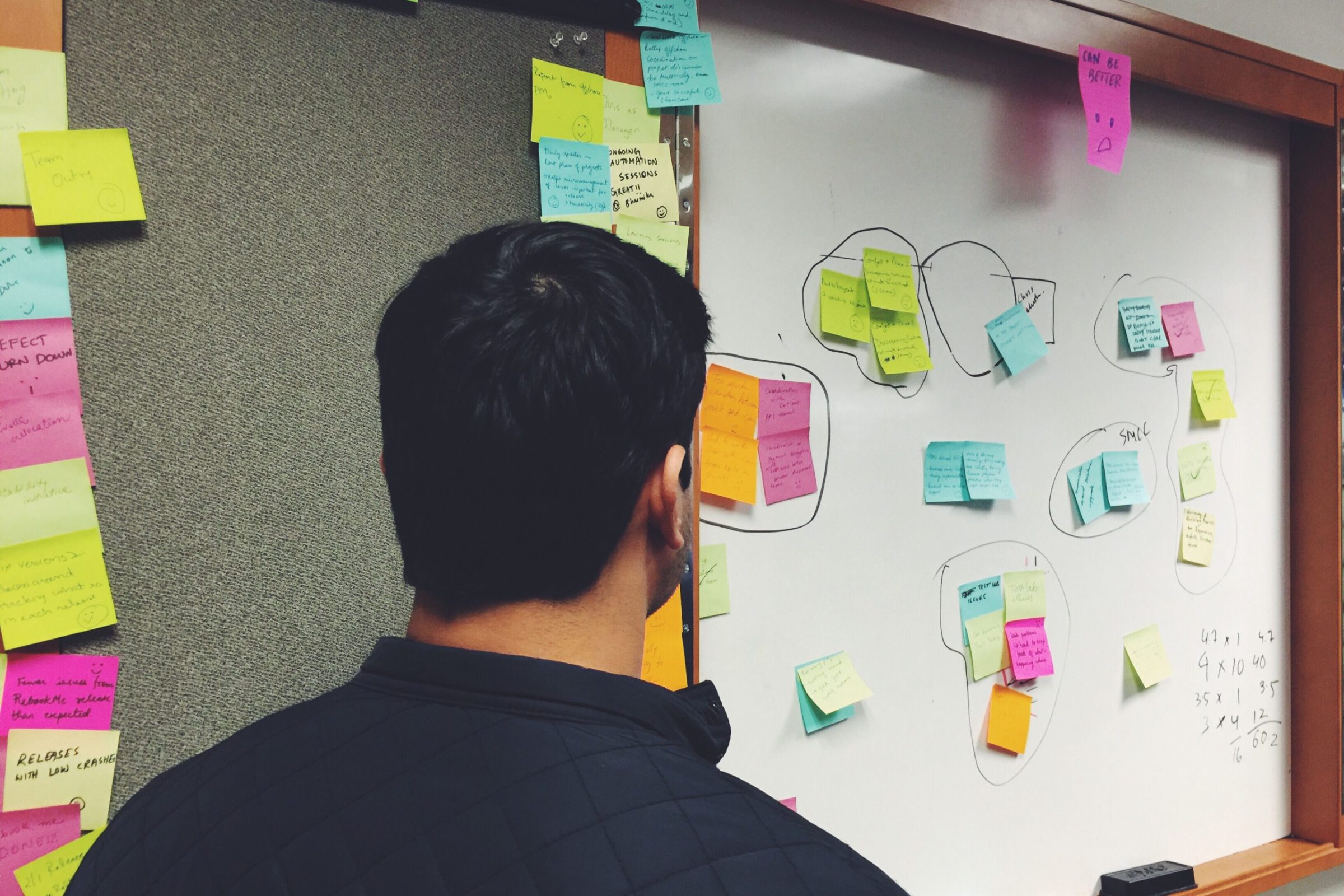
Kanban is a popular Agile framework that helps us visualize and manage our workflow. It uses digital boards and cards to represent tasks and bugs, making it easy to see the status of each work item and the overall progress of the web design or software project.
We rely on project workflow management systems for project management, where each column represents a stage of the process, and cards move from left to right as each task is completed. This enables us to track our work efficiently and spot areas that need more attention. When we can get a visual on our project status, it helps to increase productivity and efficiency. Applying Kanban into our Agile web development process allows us to optimize our workflow, stay organized and ensure that we are bringing the best software to our clients in a timely manner.
Retrospectives
Retrospectives are an important part of Agile, as they focus on both reflection and progress in the future. Retrospective meetings are generally held at the end of each sprint or project phase and they provide an opportunity for the team to discuss what worked well, what didn’t, and how we can improve moving forward. Regularly assessing our performance allows us to identify areas where more focus is needed.
Once we’ve collected the insights needed from the retrospectives, we can take action to improve our process. We create a list of actionable items and assign users to ensure follow through, which results in visible improvements in our Agile approach and overall performance.
Story Pointing
Story pointing, also known as estimation, is a valuable practice in the Agile development process. It helps to estimate the effort required for tasks, which allows us to prioritize and plan our work effectively. To figure out how much work a user story requires, it’s given a score based on how difficult, time consuming, or risky it is. This also has an affect on the pricing of the feature or user story.
Extreme Programming (XP)
Extreme Programming (XP) is another Agile framework that emphasizes high quality software and efficient teamwork. It’s based on the ideas of simplicity, communication, and quick feedback, all of which contribute to successful software development.
We incorporate a few important XP practices into our Agile approach, such as test driven development and continuous integration. These techniques enable us to improve code quality and reduce defects.
Bottom line
By embracing these Agile practices here at Surfside Web, we are able to better cultivate a productive work environment of ongoing improvement, adaptability, and collaboration so we can consistently deliver quality software to our clientele.